The Organics Truck Runs on What It Picks Up
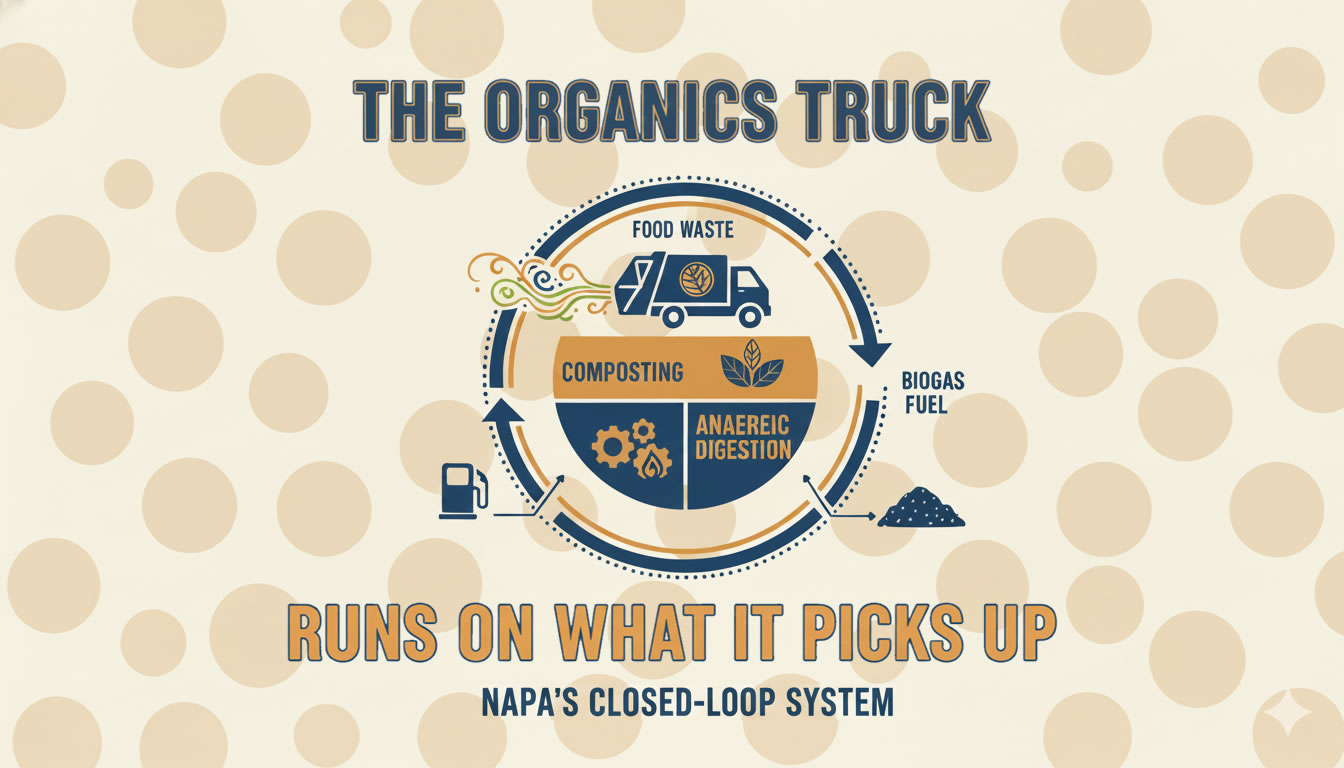
The City of Napa has added an anaerobic digester to its existing composting facility, and the biogas it produces will fuel the trucks that collect the food waste that feeds it. Kevin Miller, Napa’s Materials Diversion Administrator, put it plainly: “What you’re picking up is literally providing you the fuel to keep picking it up.”
The design gets the sequencing right in a way that matters. Composting came first. Napa’s covered aerated static pile system has been running since 2020. The digester sits alongside it, not instead of it. Digestate goes directly into the composting system and comes out as finished compost. Residential organics, which run heavy on yard trimmings, go to composting. Commercial food waste, with its higher methane potential, goes to digestion, as does the grape pomace and winery byproduct stream that comes with operating in wine country. Those materials are so wet and nitrogen-dense that composting them without enormous volumes of brown material isn’t practical. The energy stays local: the City will own the fueling station, insulating itself from fuel price swings while keeping the whole loop inside Napa’s own infrastructure.
Nothing gets incinerated. Nothing gets buried. For a detailed look at the technology, the financing structure, and the 16-year development arc that got this project built, the full story is well worth reading. (BioCycle, April 7, 2026)
Note: For those who follow the Zero Waste International Alliance hierarchy, this is worth examining closely. ZWIA is explicit on two points: anaerobic digestion is appropriate when local conditions require it, and when AD is used, it should be followed by a composting process. Napa satisfies both. The feedstock situation, high volumes of food-wet, nitrogen-rich material with insufficient brown to balance it, is precisely the local condition that makes AD the right call. And because digestate is composted on site rather than landfilled or otherwise disposed of, the nutrients complete the loop back to soil. Methane that would otherwise escape to the atmosphere during decomposition is captured, combusted, and converted to CO2, roughly 80 times less potent as a greenhouse gas over a 20-year period. (IPCC, Sixth Assessment Report)