Compost Gets a Line in the Farm Bill
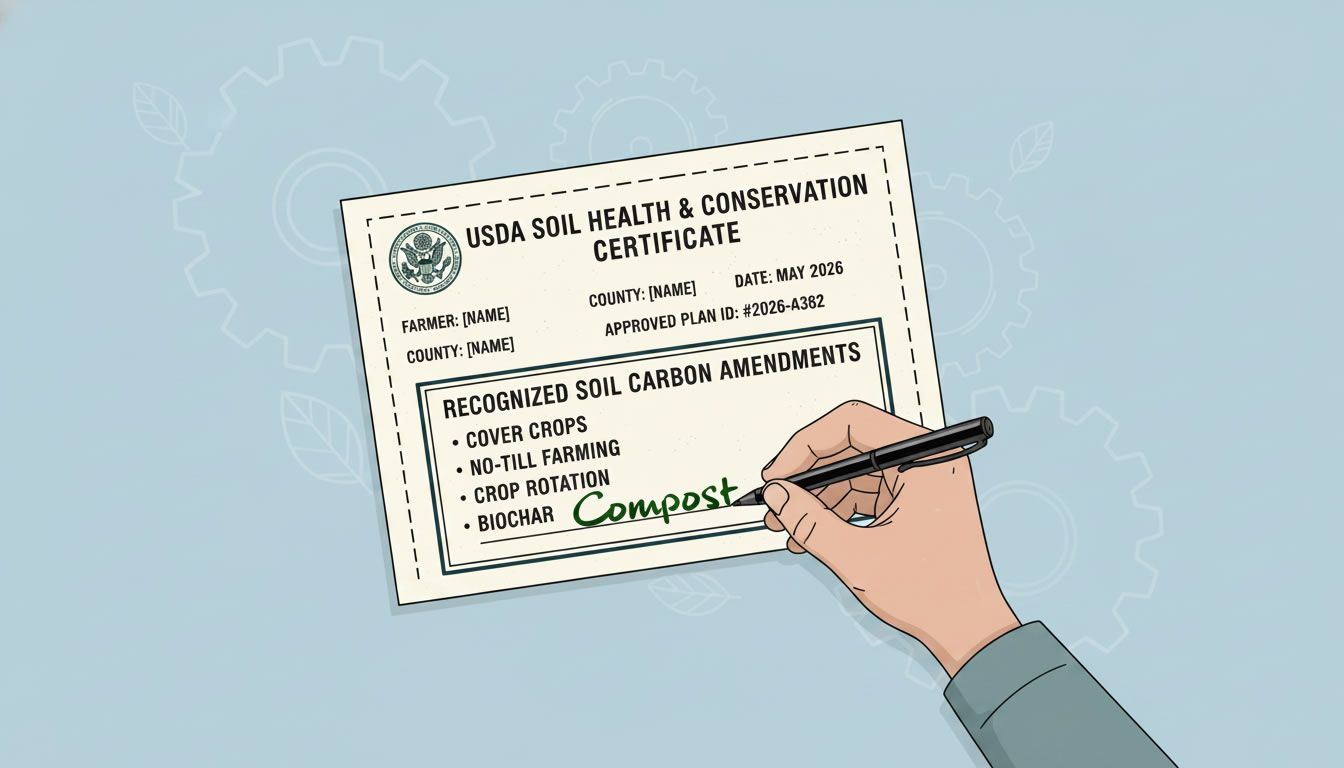
For the first time, compost is written explicitly into the USDA’s list of recognized soil carbon amendments. Farmers who use it as part of an approved conservation plan can now receive federal reimbursement for doing so. That language landed in the farm bill the House passed on May 2nd, added at the last minute by Rep. Julia Brownley of California. (Waste Dive, May 4, 2026)
The reimbursement pathway had technically existed in some cases before, but without clear statutory language it was vulnerable to being closed off by future agency decisions. Linda Norris-Waldt, executive director of the U.S. Composting Council, said the lack of explicit language was precisely what the COMPOST Act had been trying to fix since it was first introduced in 2020. Getting it into the farm bill makes the pathway durable in a way that agency discretion never could. (Waste Dive, May 4, 2026)
The practical effect is a stronger demand signal for finished compost. Composters have long struggled to develop reliable end-markets. Federal reimbursement gives farmers a direct financial reason to buy and apply compost, which closes the loop the industry needs: organic material collected from households and businesses, processed into compost, returned to the farmland it originally came from.
The farm bill does a few other things for organics diversion. The Composting and Food Waste Reduction cooperative agreement program, which has backed more than 100 composting and food waste projects since the 2018 farm bill created it, is made permanent — it had been designated a pilot. The Rural Energy for America Program, which has funded anaerobic digesters that co-digest food waste and livestock manure on farms, sees its maximum loan guarantee double from $25 million to $50 million. The bill also launches a biochar research initiative to study carbon sequestration potential across different soil conditions. (BioCycle, March 24, 2026)
What this bill isn’t: law. The Senate has yet to introduce its own version, and the two chambers will need to reconcile before anything reaches the president’s desk. The Senate Agriculture Committee is expected to begin its process in late May or early June. (Agri-Pulse, 2026) Advocates including ReFED, NRDC, and the World Wildlife Fund had pushed for more than what made it into the House version, among them additional grant funding and an expanded Food Loss and Waste Reduction Office. Kumar Chandran, policy director at ReFED, described the House bill as “a handful of provisions making progress” and said advocates would continue pushing in the Senate. (Waste Dive, May 4, 2026)
The farm bill is the federal government’s main agricultural policy vehicle, setting USDA’s budget and rules for five years at a stretch. This one is three years late… The previous bill expired in 2023. (BioCycle, March 24, 2026)